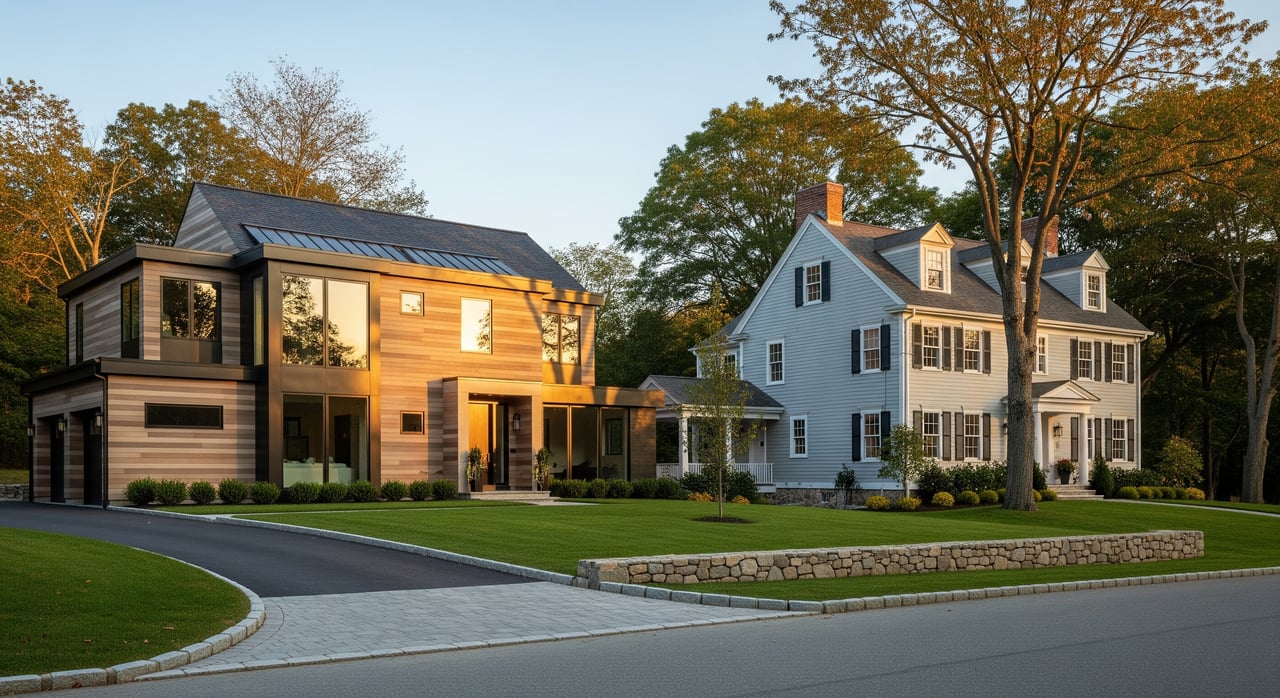
Stuck between a shiny new build and a character-filled resale in Bedford? You are not alone. As a move-up buyer focused on commute convenience and long-term value, the choice can feel high stakes. In the next few minutes, you will compare total costs, timelines, customization, inspections, and resale considerations specific to Bedford. You will also get clear checklists and the exact questions to ask builders and sellers so you can move forward with confidence. Let’s dive in.
Bedford buyer snapshot
Bedford sits just outside Manchester with convenient access to employment centers in Manchester, Nashua, and the Route 3 and I-93 corridors. Many buyers here care about lot size, privacy, and modern layouts, along with practical access to services and the airport. If you commute, micro-location within Bedford matters, since proximity to main roads influences real-world drive times.
For your decision, focus on three pillars: your move-in timeline, total cost of ownership over 5 to 10 years, and long-term resale prospects given the lot, neighborhood, and commute.
New construction: what you get
Cost and financing
New builds usually carry a premium per square foot, especially once you add upgrades and lot premiums. You might also see impact or hookup fees and higher initial HOA dues in planned communities. Builder-arranged financing and incentives are common, but evaluate the net cost rather than the headline perk. If you need to sell first, plan for bridge financing or strong contingency language.
Timeline and certainty
Quick-delivery specs can be ready in a few months, while semi-custom or custom homes often take 6 to 12 months or more. Weather, permitting, and supply can affect schedules. New construction works best when you have flexibility and a backup housing plan.
Customization and warranties
Buying early lets you select floor plans, finishes, and placement, which is ideal if you want open layouts, a main-level suite, or a dedicated office. Expect meaningful savings on maintenance during the first years thanks to new systems and insulation. Confirm warranties in writing, including workmanship, systems, and structural coverage, and who administers claims.
Due diligence for new builds
Even with warranties, independent inspections at key stages are smart. Ask for pre-drywall and rough-in access, and clarify how punch-list items will be handled prior to closing. Review the builder’s contract with an attorney so you understand deposits, timelines, change orders, and remedies if delays occur.
New construction checklist
- Timeline flexibility: Can you comfortably wait 6 to 12 months or more?
- Customization priorities: Are the finishes and layout choices worth the premium?
- Cost clarity: Verify base price, lot premium, upgrades, estimated taxes, HOA dues, and any impact or hookup fees.
- Financing: Compare construction-to-permanent and builder options, and confirm deposit sizes and refundability.
- Warranties and contract: Get terms in writing and know how claims are handled.
- Inspections: Secure rights for independent inspections at the stages you want.
- Builder reputation: Request references and look at local permit history.
Resale: what you get
Price flexibility and speed
Resale homes can offer more room to negotiate and faster closings, often 30 to 60 days after acceptance. If you need to move on a set schedule, resale provides more certainty. Established neighborhoods often deliver mature trees and lot privacy that are hard to recreate.
Condition and updates
Weigh near-term capital items such as roof, HVAC, windows, and insulation. Factor in any desired layout changes or cosmetic updates. Well-executed upgrades can support better resale later.
Inspections and negotiation
A full home inspection is standard, with specialists as needed for things like septic, radon, chimney, or structural concerns. Use inspection results to negotiate repairs or credits so your final price reflects the home’s condition.
Resale checklist
- Immediate needs: Does the home meet your timing and move-in requirements?
- Condition review: Estimate near-term costs for roof, HVAC, windows, and insulation.
- Renovation plan: Budget for layout changes or styling updates and possible disruption.
- Negotiation: Use recent comparable sales to gauge leverage.
- Location and lot: Test commute at peak hours and confirm neighborhood characteristics.
- Contingencies: Include inspection, appraisal, and sale-of-home if needed.
Commute, lot, and location
Micro-location matters
Bedford’s commuter value depends on where you land within town. Proximity to main roads and your actual peak-hour route can change a daily drive by a meaningful margin. Visit target neighborhoods during weekday rush to see real conditions.
Lot and neighborhood fit
Size, topography, sun exposure, drainage, and tree cover affect livability and future resale. Newer subdivisions sometimes have smaller or clustered lots, while established areas often have mature landscaping and privacy. Align the lot with your long-term plans.
Schools and HOAs
Bedford’s public schools are a consistent draw for many buyers. Confirm school assignments directly with the district. If a home is in an HOA, review rules, fees, and any pending projects since these affect monthly costs and resale appeal.
Future development
Check local planning and zoning information to confirm potential nearby development or road changes. Awareness of what may be built around you supports stable long-term value.
Total cost of ownership
- Mortgage and price: New builds often cost more upfront, while resales may offer negotiation room.
- Taxes: New construction can receive reassessment after completion. Always verify estimates with the town.
- HOA and fees: Many new communities have HOAs. Resales vary. Read budgets and rules closely.
- Utilities and efficiency: Newer systems and insulation can lower utility costs. Older homes may benefit from targeted energy upgrades.
- Maintenance and capital items: New homes typically have lower near-term maintenance. Resales may need roof, HVAC, or window work within your first years.
Which path fits your goals?
Choose new construction if you value customization, energy efficiency, and lower near-term maintenance, and you can handle a longer timeline and higher initial cost. Choose resale if you need to move quickly, want price flexibility, prefer mature lots and established neighborhoods, or want to avoid premiums tied to brand-new homes.
Sample timelines
- Resale purchase: Often 30 to 60 days from accepted offer to closing, subject to financing, appraisal, and inspections.
- Quick-delivery new build: Sometimes ready in a few months, depending on stage of construction.
- Semi-custom or custom build: Commonly 6 to 12 months or more, with potential delays from weather, permitting, or materials.
Questions to ask builders and sellers
Questions for builders
- What is the full price breakdown (base price, lot premium, all upgrade options, estimated taxes, HOA fees, impact or hookup fees)?
- What warranties do you provide? What is covered, for how long, and how are warranty claims handled?
- Can I have independent inspections during construction? At what stages?
- What is your typical construction timeline and what causes past delays?
- Do you offer financing incentives or rate buydowns? Are there builder-approved lenders with special terms?
- Can you provide references from recent buyers and example homes in Bedford?
Questions for sellers (resale)
- How old are major systems (roof, HVAC, water heater, electrical panel)? Any recent upgrades or major repairs?
- Why are you selling and how long has the property been on the market?
- Are there known issues (drainage, foundation, boundary disputes)? Any recent inspection reports available?
- What are average monthly utility costs and property tax amounts?
- Are there any restrictive covenants, easements, or pending neighborhood changes?
Next steps for Bedford buyers
- Pull recent comparable sales for both new construction and resale to quantify price differences for similar specs.
- Visit short-listed neighborhoods during peak commute times to confirm real drive times and bottlenecks.
- For new construction, request the full price sheet, contract, warranty terms, and recent buyer references, then review with an attorney.
- For resale, order a comprehensive home inspection and add specialists as needed for septic, radon, chimney, or structural concerns.
- Build a 5 to 10-year total cost projection that includes mortgage, taxes, utilities, HOA dues, and maintenance or renovation plans.
Ready to compare specific Bedford options and run numbers side by side? Get disciplined, local guidance from Chris Pascoe. You will get a clear plan, straight answers, and a strategy tailored to your timing and budget.
FAQs
What is the typical timeline to build a new home in Bedford, NH?
- Quick-delivery homes can be ready in a few months, while semi-custom or custom builds commonly take 6 to 12 months or more depending on weather, permitting, and materials.
How do property taxes work for new construction in Bedford?
- New builds often receive an updated assessment after completion that affects your tax bill; always confirm estimated taxes with the town assessor before you finalize a budget.
Are HOAs common in new Bedford subdivisions?
- Many new communities use HOAs to manage roads, landscaping, or amenities; review dues, budgets, and rules since these affect monthly costs and future resale.
What inspections should I order on a Bedford resale home?
- Start with a general home inspection, then add specialists as needed for septic, radon, chimney, or structural items based on the property and inspector findings.
Do Bedford builders offer incentives and are they worth it?
- Builders often offer closing cost credits, rate buydowns, or appliance packages; evaluate the total net cost rather than focusing on the incentive alone.