If Bedford's tax rate dropped by more than a dollar and a half per thousand this year, why is the median single-family home paying about $700 more?
The New Hampshire Department of Revenue Administration set Bedford's 2026 rate at $14.73 per $1,000 of assessed value on October 20, 2026. The 2025 rate was $16.49. That's a cut of about 10.7%, and a lower number like that usually reads as good news. It isn't good news for most homeowners this year, because the rate fell in the same year as a town-wide revaluation, and residential values went up a lot more than the rate came down.
The total amount Bedford raises from property tax went from $103,071,961 in 2025 to $109,329,425 in 2026, about 6.1% more. That total is set by budgets and revenues voted elsewhere. What the revaluation set was how that total gets divided among properties.
The Revaluation and the Break-Even Line
The old rate of $16.49 divided by the new rate of $14.73 is about 1.119. That gives a break-even assessment increase of about 11.9% for the rate change alone.
Now look at what the revaluation did to the town's property classes. Chief Assessor Doug Irvine told the Town Council on September 9, 2026, that residential property saw "an 18% overall percentage increase," according to the Union Leader's coverage of the meeting. The meeting minutes show the overall commercial increase was 12%.
Commercial property ended up almost exactly on the break-even line, and residential property ended up well above it. Irvine's figures, also reported by the Union Leader, show residential makes up more than 80% of Bedford's valuation, commercial under 12%, and industrial parcels 3.53%. So when homes rose faster than everything else, the extra 6.1% in the tax commitment fell mostly on homeowners.
The Median Home, Worked Through
The Union Leader reported that Bedford's median single-family assessed value is $807,500 for 2026, up 18% from $678,400 in 2025. Apply each year's rate to its own assessment:
- 2025: $678,400 × $16.49 per $1,000 = about $11,187 a year.
- 2026: $807,500 × $14.73 per $1,000 = about $11,894 a year.
- Difference: about $707 more per year, an increase of roughly 6.3%.
That 6.3% is nearly the same as the 6.1% growth in the town's total commitment. The median house simply moved with the town. The more useful question for a buyer or owner is which houses moved faster than that.
Ranches, Capes and Antiques Crossed the Line Hardest
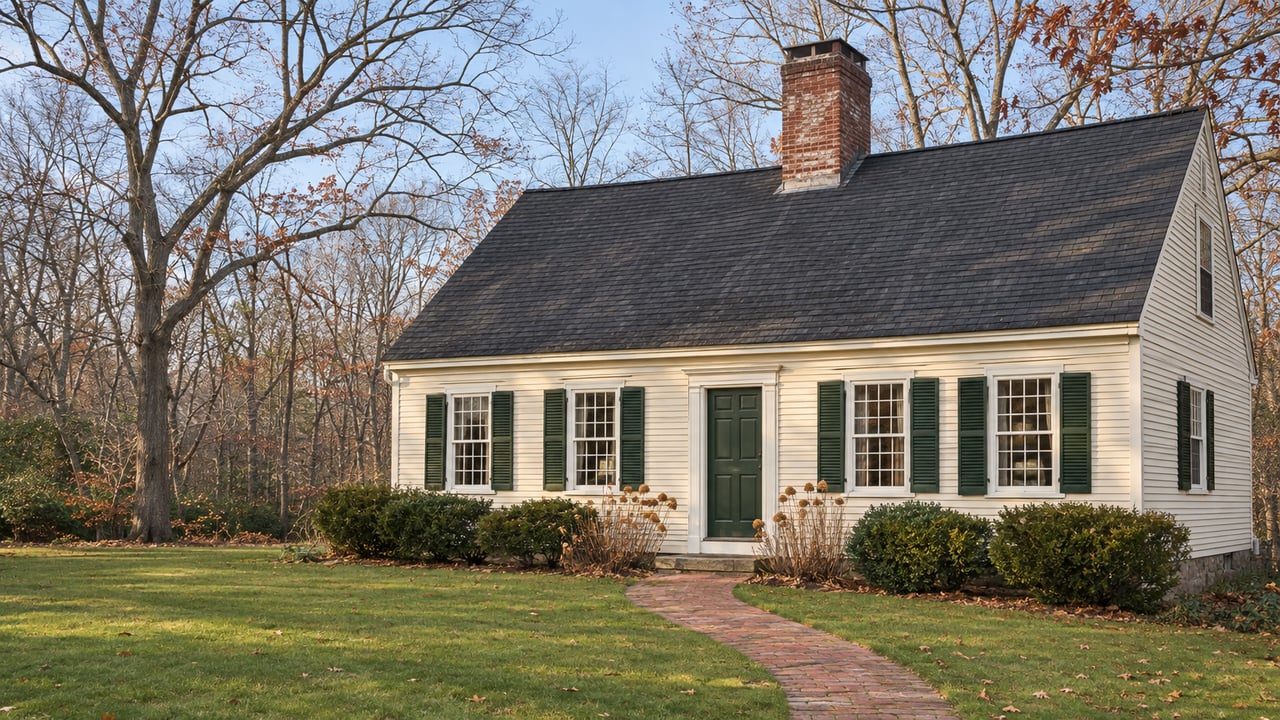
Irvine broke the residential increase down by building style. Antique-style homes went up 30%, ranches 26%, and Cape Cod-style homes 20%, according to the Union Leader. Run the same break-even arithmetic on each one:
| Property group, 2026 revaluation | Reported assessment change | Approx. change in annual tax at $14.73 vs. $16.49 |
|---|---|---|
| Antique-style homes | +30% | about +16% |
| Ranch homes | +26% | about +12.6% |
| Cape Cod-style homes | +20% | about +7.2% |
| Median single-family home | +18% | about +6.3% |
| All residential, overall | +18% | about +5.4% |
| Commercial, overall | +12% | roughly flat |
The table applies group-level figures, so it's illustrative arithmetic. It isn't a forecast for any one address. Your own bill depends on your own parcel's assessment, which can rise well more or less than its group's figure.
Of the residential groups Irvine named, antiques, ranches and Capes rose the most, so they went furthest past the break-even line.
Irvine also gave a reason assessments trail the market between revaluations. "The goal has always been 100% of market value should be reflected in your assessment," he said, as reported by the Union Leader. "Next year, if the market goes up three or four percent, well, our assessments are low." In other words, home styles whose sales prices had pulled away from their 2023 assessments were reset all at once in 2026.
Two Neighborhoods on One Street
The same effect plays out at a smaller scale than building style. Irvine said Bedford has about a dozen traditional neighborhoods, with median sale prices ranging from $527,500 at the low end to nearly $2 million at the high end. He used Barrington Drive as his example of how sharp the lines can be:
"There's an old phase portion of that street and then there's the newer phase and it's very obvious... They're two different distinct neighborhoods on the same street."
He made that remark to the Town Council, in the Union Leader's account. The minutes add that neighborhood adjustments are based entirely on historical and current sales data. Two houses with the same mailing street can land on different sides of the 11.9% line because each phase of the street has its own sales history.
A Tax Figure on a Bedford Listing
A Bedford listing may show an annual tax figure taken from the 2025 bill. That number came from a 2025 assessment at the $16.49 rate.
The rate alone also won't tell you much when you compare towns. For 2026, DRA shows Litchfield at $14.35 and Windham at $14.57, both close to Bedford's $14.73. Rates that close mean little until you multiply each one by the assessment it's charged against, and Bedford's assessments were just reset to 2026 market levels.
Irvine described the 18% residential increase as "roughly 6% a year," compared with about 15% a year in the 2023 cycle. Values are still rising, just more slowly than during the last reset. That makes this year's split between home styles more important than the overall headline number.
Quick Answers on the Bedford Bill
When are Bedford property taxes due? The town's FAQ lists two due dates each year, July 1 and December 1. The December bill covers October 1 through March 31 of the following year.
Is the 18% figure the same as the "valuation" number in the state's rate table? No. The Union Leader reported the gross total municipal valuation rose 20.54% to $7.7 billion. DRA's rate table lists Bedford's 2026 valuation at $7,343,220,268, compared with $6,169,601,059 in 2025. These measure different things. The 18% is the residential assessment increase Irvine reported.
What if an owner thinks their new assessment is wrong? New Hampshire calls this process an abatement, which is a request to local assessing officials. The NH Department of Revenue Administration's abatement page explains the steps. Filing timelines and applications are posted by the Board of Tax and Land Appeals, and the governing statute is RSA 76:16.
This post is general information, not legal, tax or financial advice, so confirm your own assessment, bill and deadlines with the Bedford Assessing Department or a qualified tax professional.
If you're pricing a Bedford ranch, Cape or antique this winter, or weighing an offer on one, Chris Pascoe can help. Start with Get Your Home Value.